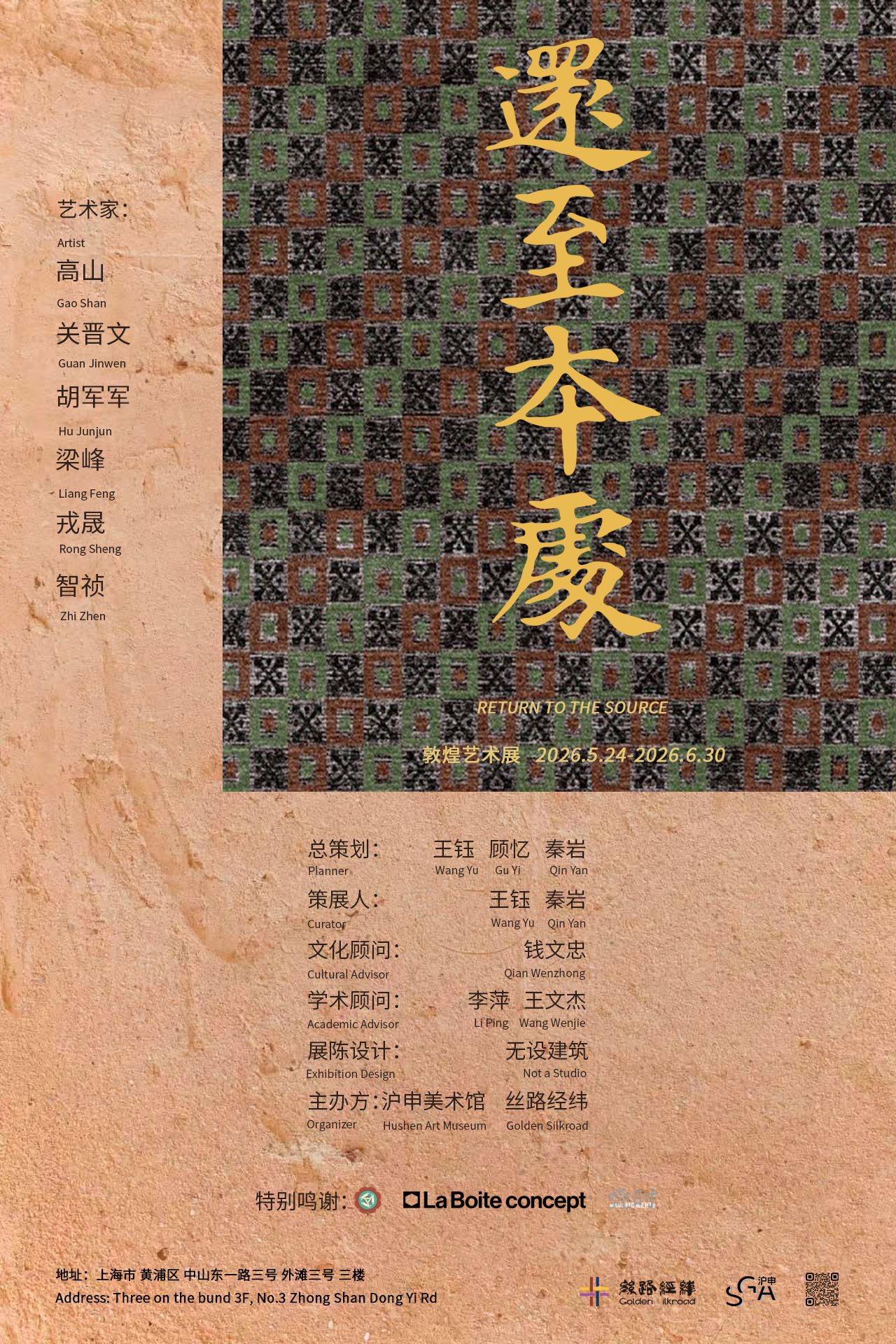
Exhibition Period
24th May 2026 – 30th June 2026
Venue
SGA Three on the Bund, 3F, No.3 Zhong Shan Dong Yi Road, Shanghai
Curator
WANG YU | QIN YAN
Artists
GAO SHAN | GUAN JINWEN | HU JUNJUN
LIANG FENG | RONG SHENG | ZHI ZHEN
▃
At the beginning of the Diamond Sutra, a scene of utmost simplicity yet profound solemnity is fixed in time: the World-Honored One “returned to his original seat, arranged his mat, and sat down.” In these few words resides a serenity and composure capable of cleansing the mind itself. Having completed his daily alms round, this awakened one—fully enlightened to the source of life—displayed no miracles, emitted no auspicious radiance. He merely returned calmly to where he had been before, spread out his seat, and sat in silent stillness. To the ordinary eye, this may appear no more than the mundane act of washing one’s feet and settling oneself. Yet within this utterly ordinary moment of sitting down lies boundless prajñā wisdom. That afternoon, the Buddha’s seat may have been nothing more than a simple straw mat or a modest woolen rug, yet it became the earliest imprint linking enlightenment with the human world.
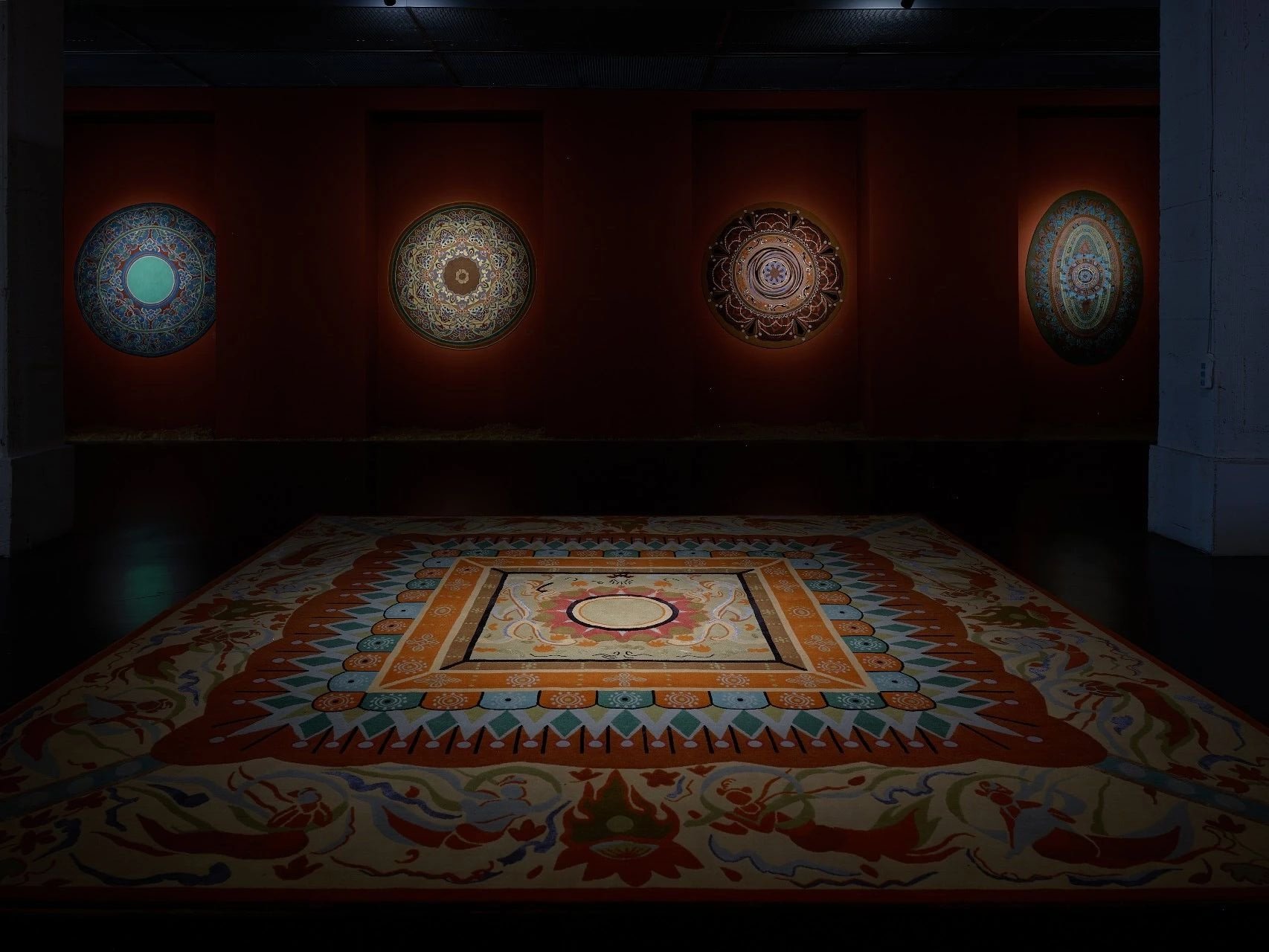
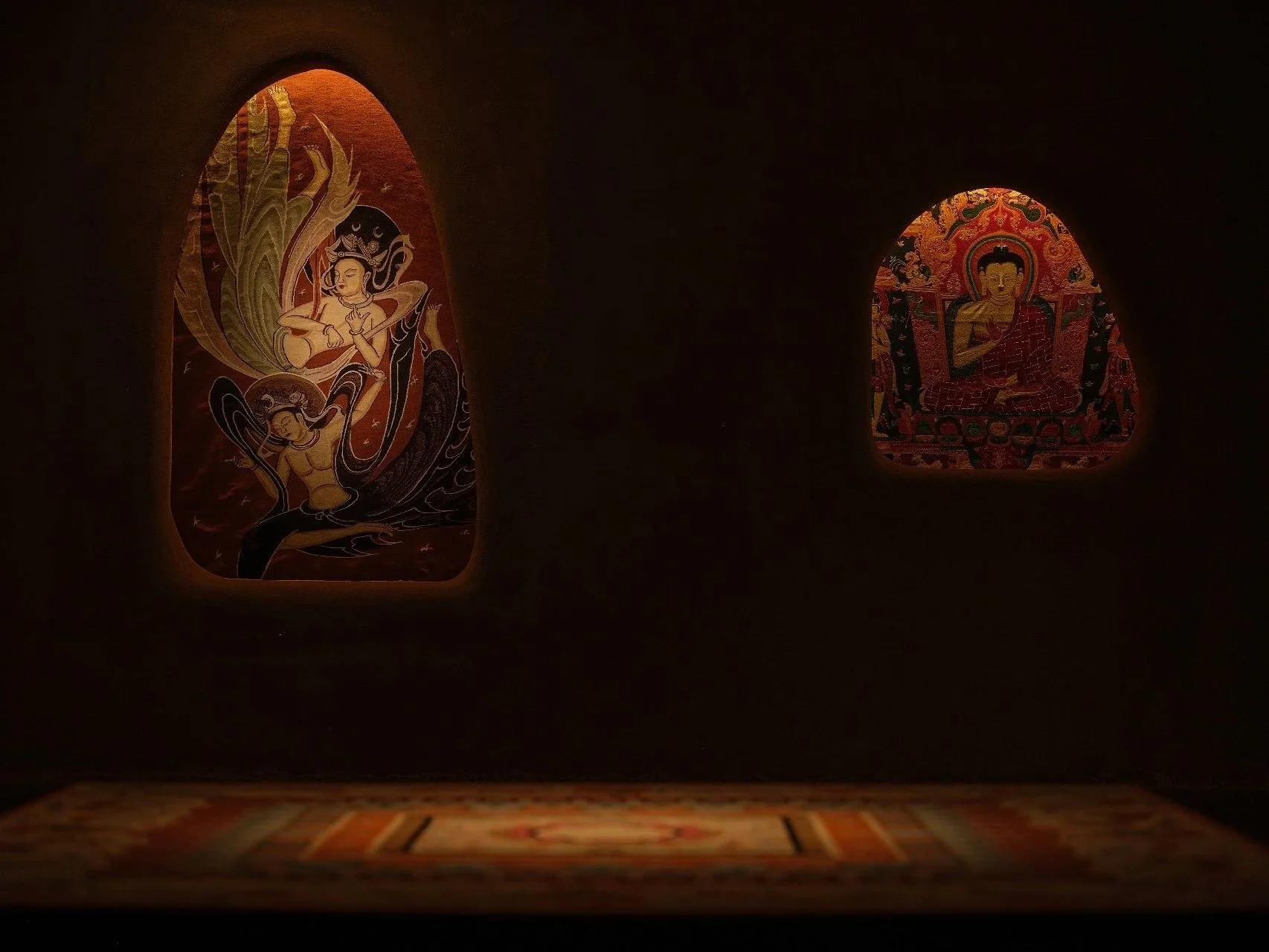
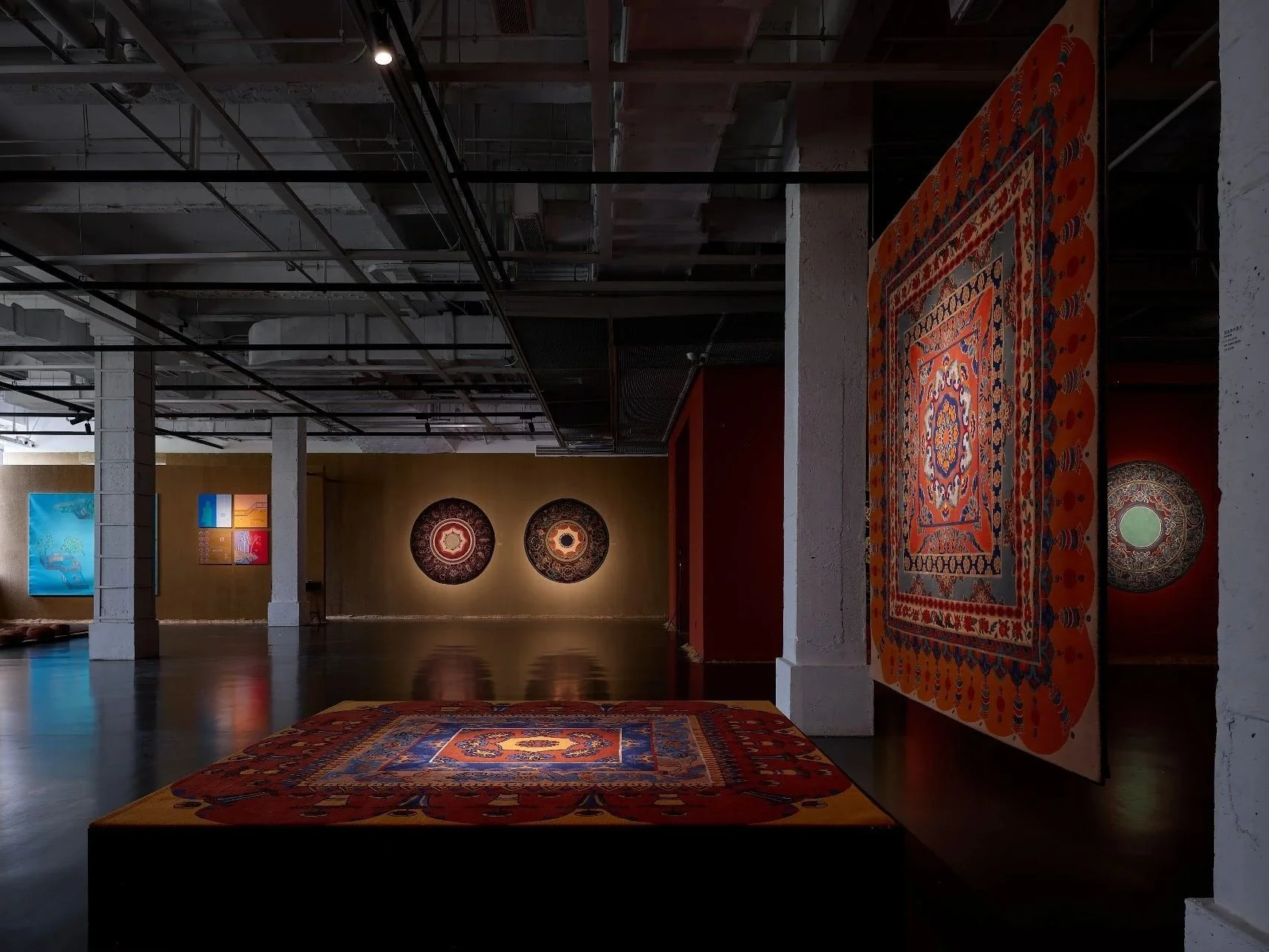
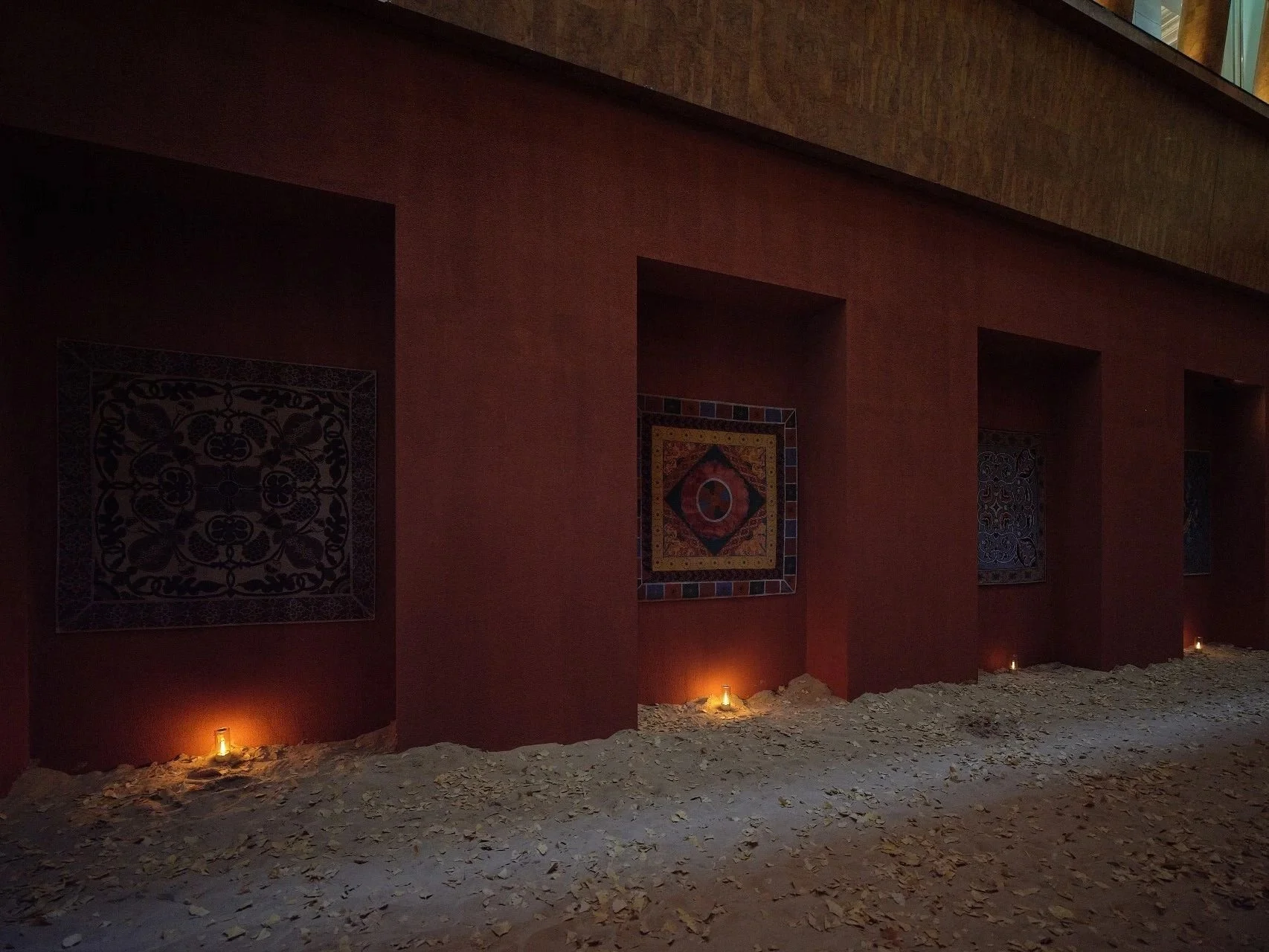
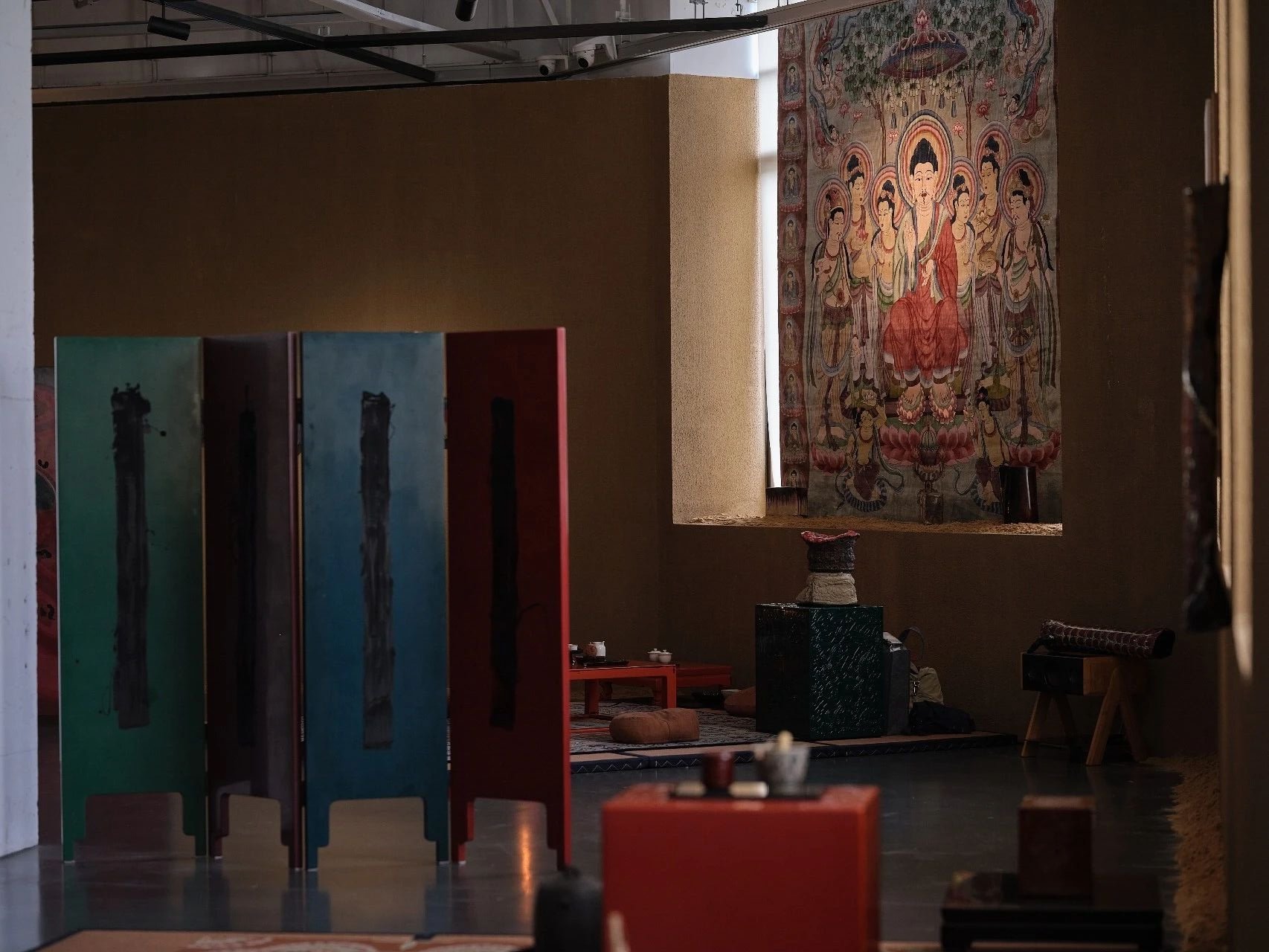
The phrase “arranging the seat” has traversed millennia of time—from the immovable vajra seat of the Buddha’s enlightenment, to the magnificent “kushu seats” of Vajra deities, to one of the six essential possessions of a bhikṣu, equal in importance to the three monastic robes. A small woven sitting cloth came to embody the lived experiences of countless seekers of awakening, transforming into a tangible image of spiritual life itself. Tracing the threads of civilization to the Silk Road jewel of Mogao Caves, amid the interplay of shadow and brilliance within its grotto murals, one constantly encounters carpets and rugs bearing the weight of centuries and faith. Throughout the thousand-year murals of Dunhuang, carpets appear everywhere: in the Pure Land Transformation and Medicine Buddha Transformation paintings of Cave 220 from the early Tang dynasty, more than a dozen carpets with distinct patterns unfold scenes of the Buddhist paradise; in the dance and music paintings of Tang's most prosperous era, rich colored carpets support the graceful movements of dancers; in preaching scenes, the seat-rugs beneath Buddhas and bodhisattvas convey majesty and sanctity, while the cushions used by donors and devotees seated upon the ground radiate warmth and intimacy. The patterns woven into these textiles unite the artistic vocabularies of East and West along the Silk Road. They contain both the elegance of worldly life and the solemnity of the Buddhist realm. Long transcending their original function as objects for sitting and reclining, they became sacred vessels of Buddhist ritual and tangible threads linking the civilizations of Eurasia. Through softness and pliancy, they upheld unwavering faith and bore witness to the flourishing encounter of Eastern and Western civilizations.
Sixteen centuries ago, the monk Lezun, standing before Mount Sanwei, beheld streams of golden light and conceived a great vow. He built a humble hermitage and opened the first cave, from which the lineage of the Dunhuang grottoes would continue for a thousand years, illuminating history with enduring brilliance. In the early 1990s, after graduating from university, I worked as a tour guide and entered Dunhuang countless times. Wandering among its ancient painted walls day after day, affection gradually deepened into profound joy. From 1993 to 1999, I lived and worked in Dunhuang for eight years, during which the cultural spirit and meditative atmosphere of this land became deeply inscribed into my life. In 1994, inspired by the Contemplation Sutra Transformation mural in Cave 217 of the Mogao Caves, I commissioned my first large-scale tapestry. The transformation paintings of Dunhuang represent one of the great cultural syntheses between Buddhism from the West and the Chinese spiritual tradition. They transformed profound Buddhist teachings into joyous Pure Lands perceptible and accessible to the people of the Tang dynasty. They also completely altered the course of my own life. The profound philosophy embedded in Dunhuang murals reshaped my understanding of life, the universe, and existence itself. From that moment onward, I devoted myself to the art of tapestry weaving. For decades, I have worked tirelessly, using silk threads as brushstrokes and the loom as my medium, weaving dozens of works that reinterpret the spiritual essence of Dunhuang murals. Special exhibitions were subsequently held at Longhua Temple in 2014, Fo Guang Shan Institute of Humanistic Buddhism in Shanghai in 2015, and Fo Guang Shan in 2016. Monumental Buddhist carpets produced by the Silk Road Warp & Weft Workshop have since been collected by sacred temples including Longhua Temple, Famen Temple, Fo Guang Shan, and Muryoju-ji, allowing the Zen spirit of Dunhuang and the beauty of textile art to spread far and wide.
The artists, scholars, and experts gathered for this exhibition are either old friends from the Dunhuang Academy whom I first met thirty years ago, or respected teachers and companions deeply connected with Dunhuang through karmic affinity. With sincere hearts, we present this feast of civilization and art as an offering of reverence to the Buddha who attained enlightenment beneath the Bodhi tree. Without the Buddha’s awakening, his transmission of the Dharma, and his silent teaching through the gesture of holding up a flower, Dunhuang might have remained only a desolate stretch of gravel desert along the Silk Road. It was the radiance of Buddhism that transformed the cliffs beneath Mount Sanwei into an artistic sanctuary shining across a millennium, making possible today’s gathering and presentation across time and space.
“Reture to the Source” is the journey home of the spirit; “to arrange the seat and sit down” is the settling of life itself. Those small woven carpets become spiritual coordinates linking movement and stillness, action and repose. They witnessed the Buddha returning quietly with his alms bowl, far removed from worldly clamor, while also preserving the prosperity and cultural exchange of the ancient Silk Road.
The four-character title of this exhibition derives from the Tang-dynasty woodblock edition of the Diamond Sutra discovered in the Dunhuang Library Cave and dated to the ninth year of the Xiantong era (868 CE), the world’s earliest precisely dated woodblock-printed book. “Return to the Source” is not only the Buddha’s most direct and ultimate teaching to all sentient beings, but also the necessary path through which each of us seeks our true mind and returns to the source of our own being.
Article/ Qin Yan
▃
Gallery