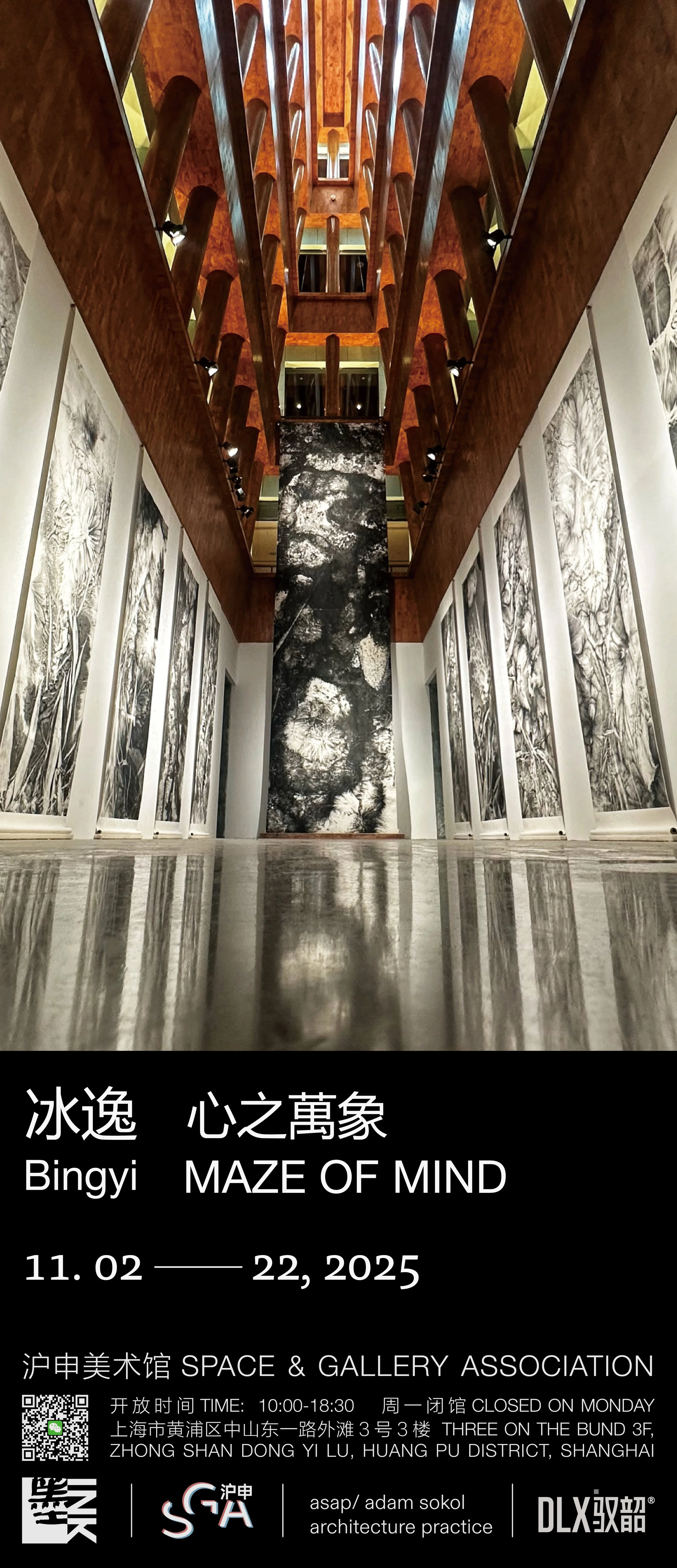
Exhibition Period
2nd November 2025 – 29th November 2025
Venue
SGA Three on the Bund, 3F, No.3 Zhong Shan Dong Yi Road, Shanghai
Artists
Bingyi
▃
Hushen Art Museum is pleased to present artist Bingyi's solo exhibition "Maze of Mind".
In this exhibition, Bingyi constructs the journey about the human mind —unfolding through meaning, transformation, and transcendence, guiding humanity's inner voyage and contemplation into the depths of the universe.
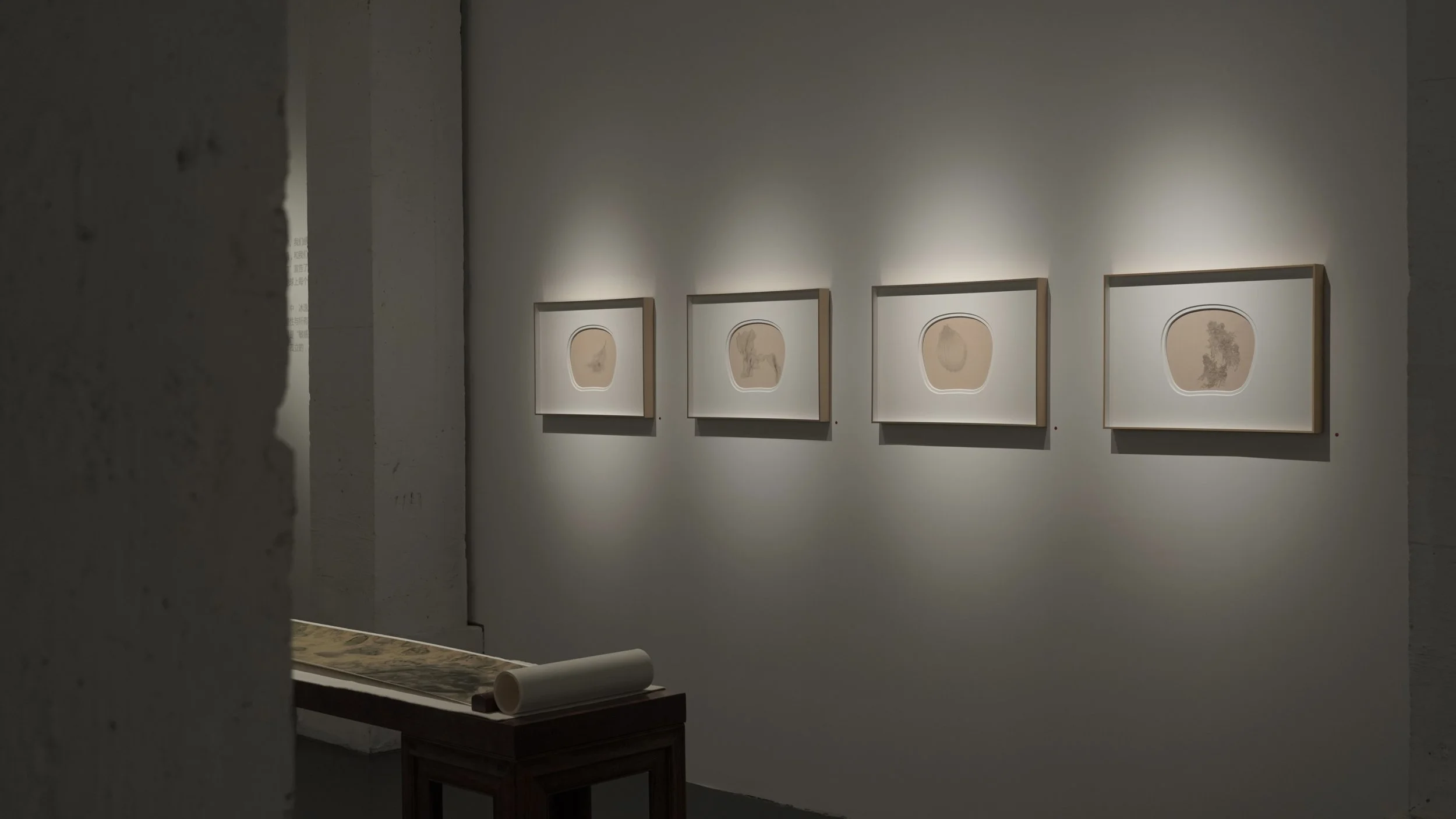
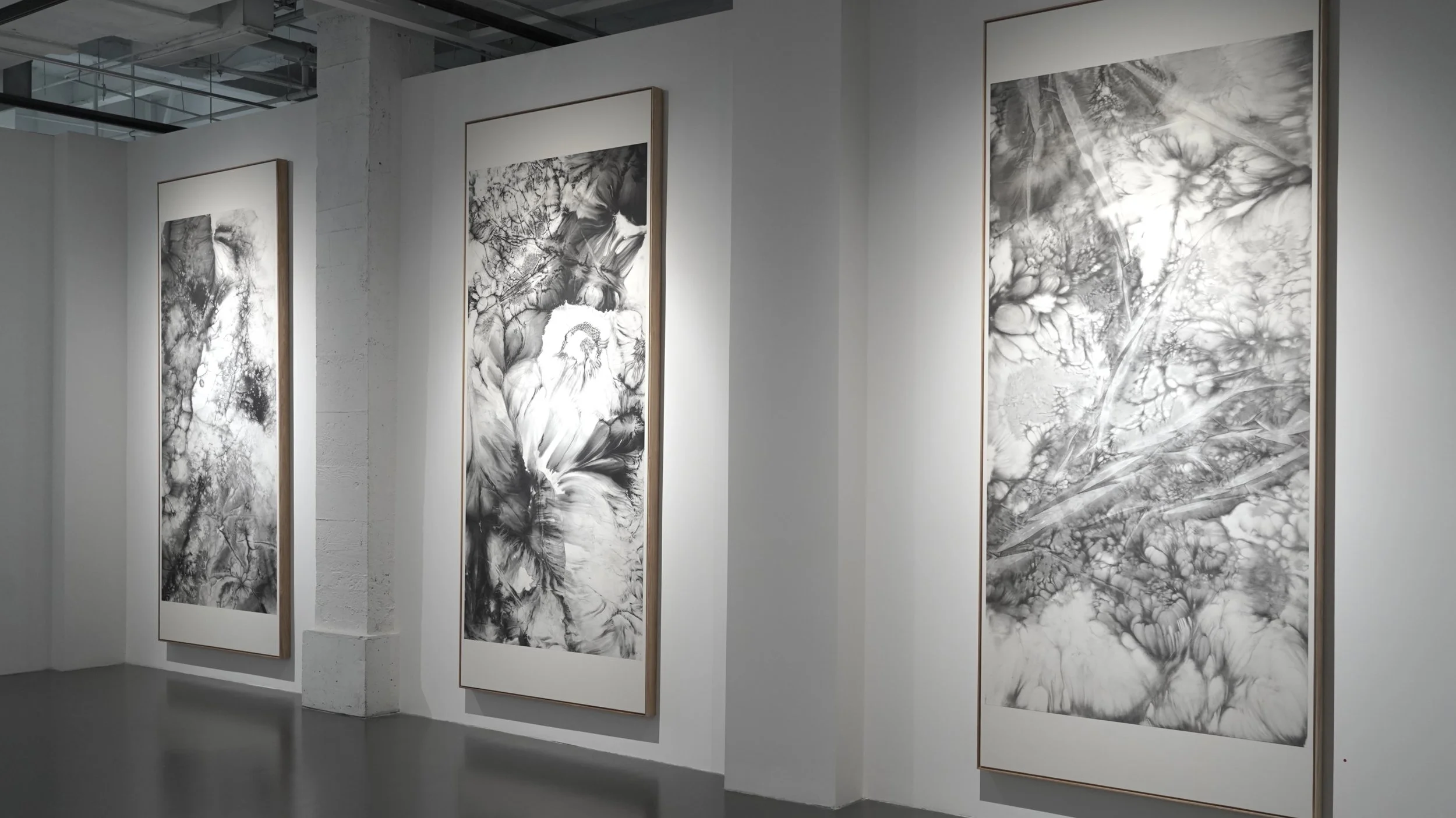
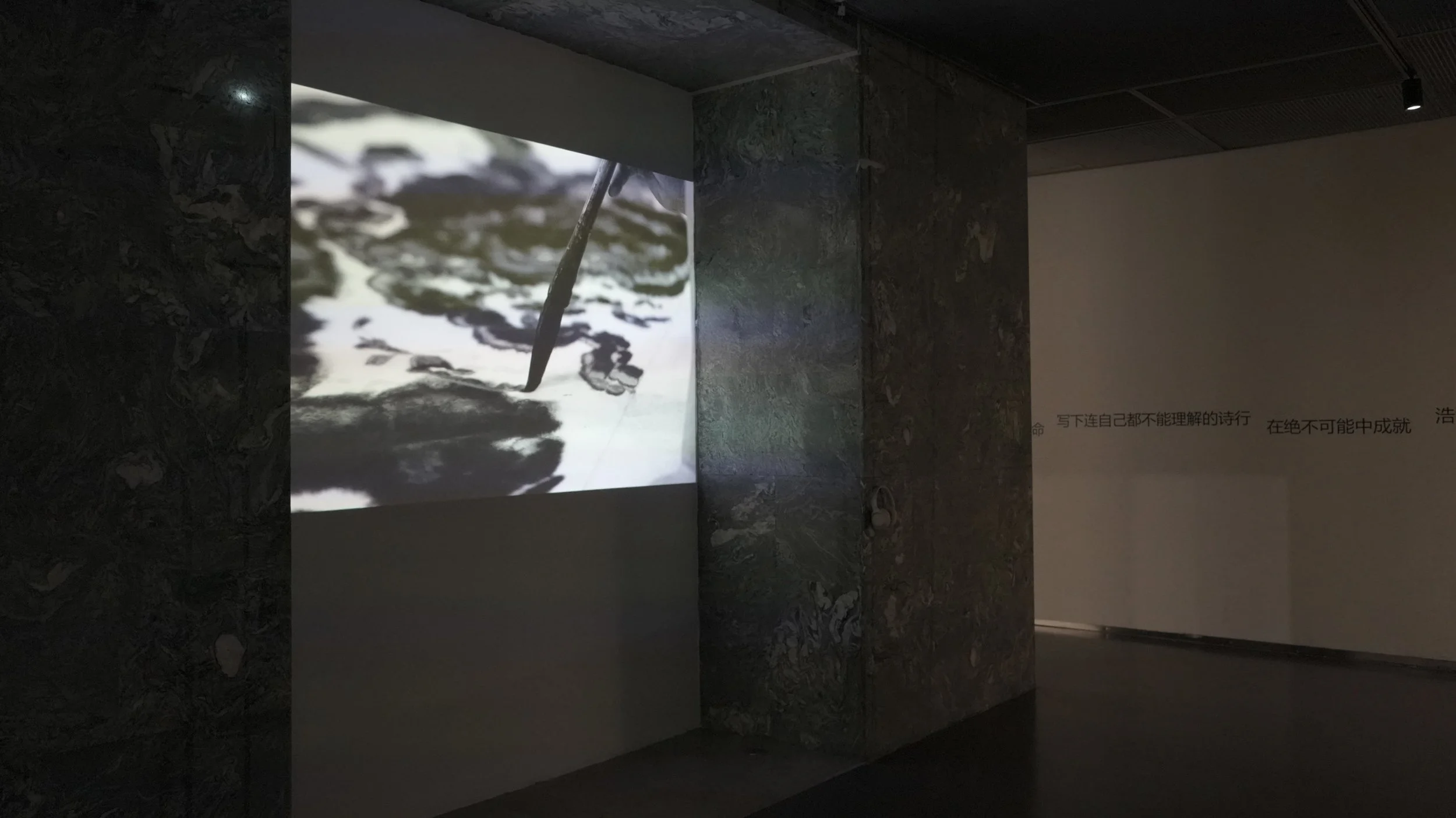
The artist uses the dryness of paper and the fluidity of ink as mediums, allowing the two elements to merge and transform into radiance.
The Temple of Mind — The Inner Cathedral
At the heart of the exhibition — within the iconic central atrium of SGA at Bund No.3 — stands The Temple of Mind, a monumental work taking twelve years in the making by Bingyi. It is not only a sanctuary, opening to heaven and earth, but also the everest of artistic and creative experience.
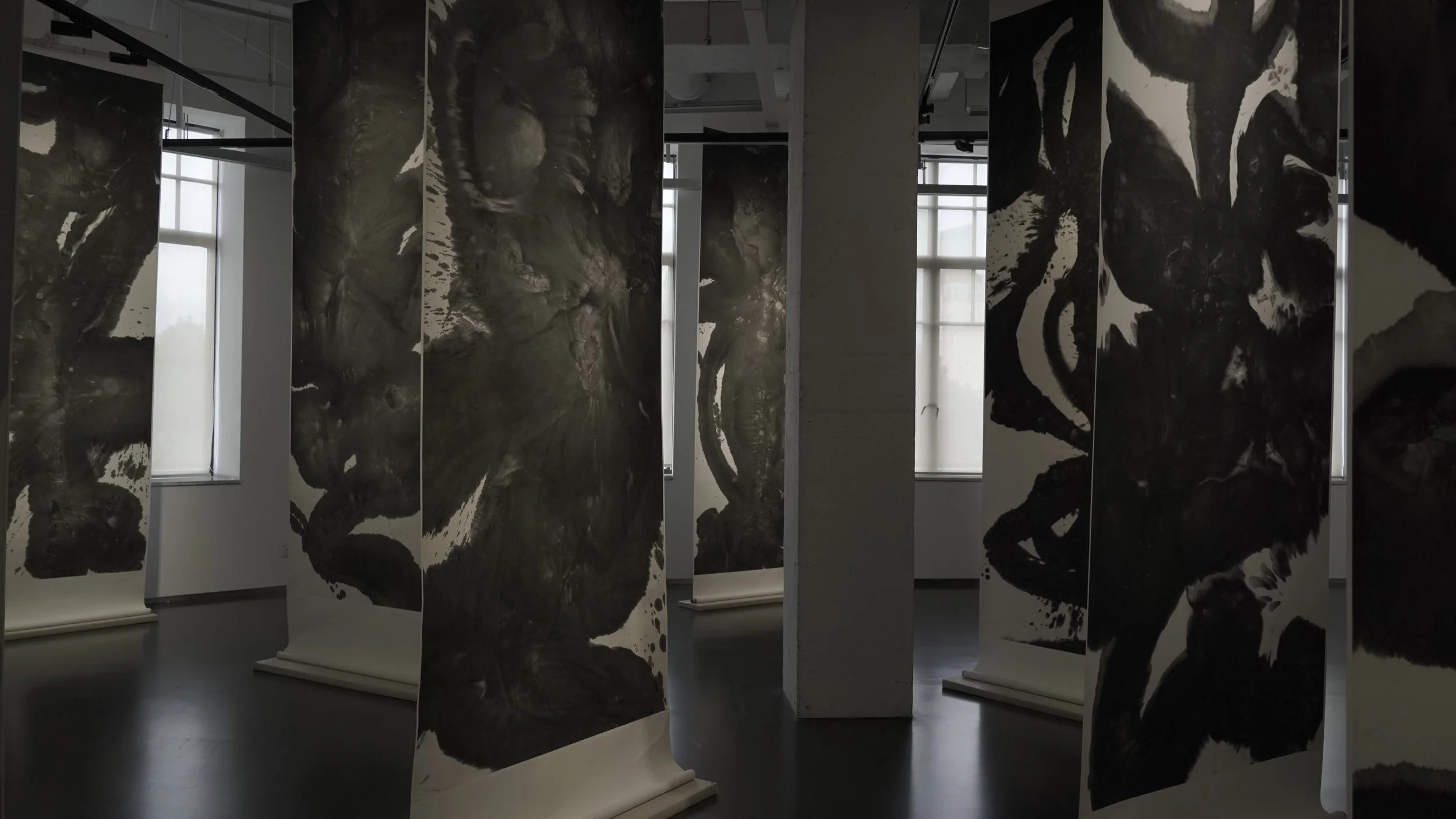
Suspended in the atrium is the majestic scroll, "All Beings", which is a 24m × 3m work of art presenting Bingyi’s collaboration with the natural forces of Mount Longhu. Like the heart of the temple itself, this work is vast, breathing, and alive.
The works along side "All Beings" are the "Thunder Rites" series, created by Bingyi on Mount Longhu. These works serve as windows to the celestial realm, connecting the past and the present, the body and the spirit, the light of heaven and earth. Over the past twelve years, Bingyi’s enduring creative journey across China’s sacred mountains has formed The Temple of Mind, embodying every dimension of the Maze of Mind.
This majestic work bears witness to Bingyi’s decades-long exploration of the human mind — its architecture, radiance, divinity, and potential. It is both an archive and an oracle — a continuum of light uniting art, consciousness, and technology.
▃
About the Artists
Bingyi lives and works between Beijing and Los Angeles. Her practice combines painting and poetry, literature and calligraphy, installation and performance, nature and cultural history. Scholar Gao Minglu describes her work as “As vast as it is precise.”.
From 2025–2026, her works will be featured at The Morgan Library & Museum (New York), Harvard Art Museums, Smithsonian’s National Museum of Asian Art (Washington, D.C.), and the Los Angeles County Museum of Art.
Born in Beijing in the 1970s, Bingyi achieved her Ph.D. in Art History and Archaeology from Yale University in 2005. Her dissertation Rereading Mawangdui was listed among ProQuest’s 10 of the most-read doctoral theses worldwide that year.
Her works have been exhibited at institutions including the Los Angeles County Museum of Art, Philadelphia Museum of Art, Brooklyn Museum, Today Art Museum (Beijing), Istanbul Modern, Smart Museum of Art (University of Chicago), St. John’s Church (Berlin), Erna Hecey Gallery (Brussels), and Max Protetch Gallery (New York).
Her works are collected by multiple public institutions, which include:
Los Angeles County Museum of Art; Art Institute of Chicago; Yale University Art Gallery; Smithsonian National Museum of Asian Art; Philadelphia Museum of Art; White Rabbit Gallery (Australia); Alicante Museum of Contemporary Art (Spain); and China Women and Children’s Museum.
Her documentary works include:
“The Enduring Passion for Ink”; “Shape of the Wind”; “Epoché” and etc..
▃
About INKstudio
Based in Beijing and New York, INKstudio is dedicated to presenting the unique and experimental ink art from China within the global contemporary context. Through exhibitions, academic publishing, film production, and bilingual research, the gallery fosters cross-cultural dialogue between artists and ideas.
Since its founding in 2012, INKstudio has regularly participated in The Armory Show (New York), Art Basel Hong Kong, and West Bund Art & Design (Shanghai). Works by the artists presented have entered major institutional collections including The Metropolitan Museum of Art, Los Angeles County Museum of Art, Brooklyn Museum, and M+ (Hong Kong).
This August, Hushen Art Museum is pleased to present the group exhibition Mono·Substance & Beyond. Bringing together Korean artist Lee Ufan, Japanese artists Kishio Suga and Nobuo Sekine, the exhibition centers on the radical artistic practices of Mono-ha (literally, “School of Things”), a movement that emerged in Japan in the late 1960s. Through a selection of seminal works, the exhibition examines how these artists employed natural and industrial materials—stone, wood, steel plates, paper, and others—to articulate the intrinsic presence, tension, and vitality of substance itself. The exhibition will be on view from August 26 to October 10, 2025.
While revisiting the historical trajectory of Mono-ha within the postwar East Asian context, the exhibition simultaneously seeks to reframe its significance in contemporary discourse. To “negate things with things,”and to apprehend the world through the relations of substance to its surroundings—such was the conceptual ethos of the movement. Here, audiences are invited to encounter anew the interrelations among “object,” “space,” and “participant,” and to experience how these relations transform perception itself.
Through the unadorned presentation of material, Mono-ha artists sought to displace the modernist preoccupation with form and image, returning art to a primary and pre-linguistic register of experience. For them, the essence of the artwork lies in substance itself—not in elaborate craftsmanship or decorative excess, nor in explanatory discourse. It is through the weight, texture, and state of being of things that art discloses its presence.
In this sense, Mono·Substance & Beyond is not merely an exhibition of objects but an experiential field. Viewers are not passive spectators but active participants in a constantly shifting spatial dynamic. Movement and stillness within the exhibition space perpetually activate the tensions among materials, subtly altering the state of the works. The body, the gaze, and sensory perception of the audience intertwine with the presence of matter, generating relations that are never fixed but continually in flux—relations through which a renewed apprehension of the world may emerge.
▃
Gallery